North America
The Turtle Bay Banyan Tree
21.6962° N, 158.0086° W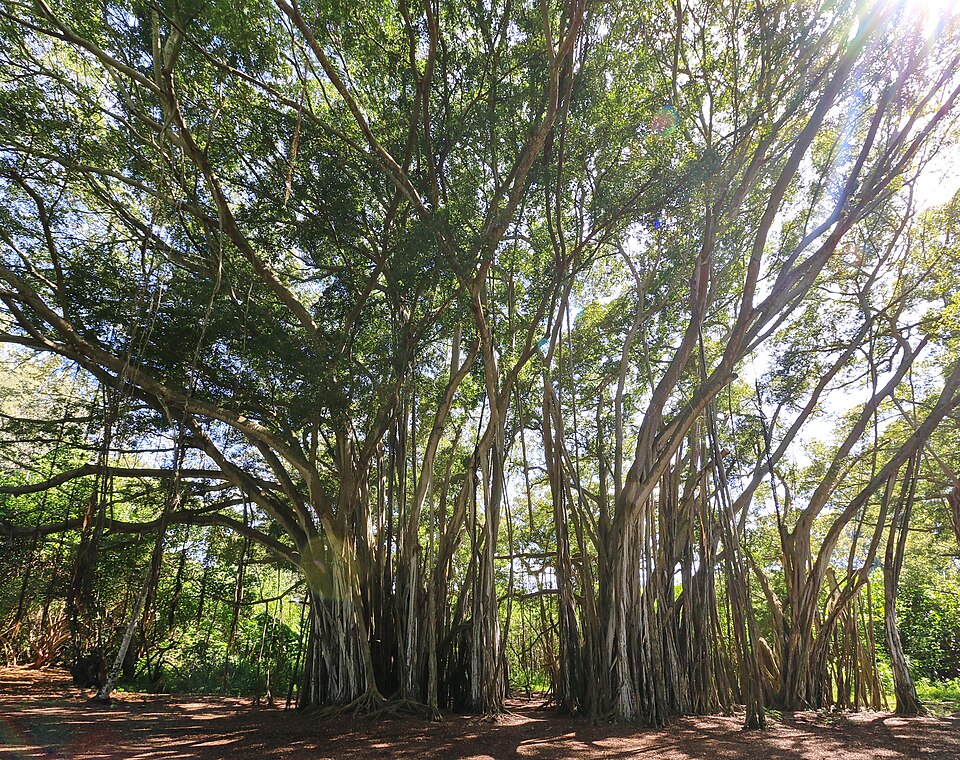
Photo: Robert Linsdell from St. Andrews, Canada, CC BY 2.0 https://creativecommons.org/licenses/by/2.0, via Wikimedia Commons
A Tapestry of Nature, Resilience, and Pop Culture
Nestled on the rugged North Shore of Oahu, Hawaii, the Turtle Bay Banyan Tree stands as a majestic sentinel, its sprawling limbs weaving a story of natural splendor and cinematic legend. This iconic banyan, with its labyrinthine aerial roots and lush, emerald canopy, is more than a tree—it’s a living monument to resilience, beauty, and the enduring power of stories. Planted over a century ago, its origins are shrouded in the mists of time, yet its presence has become a beacon for adventurers, dreamers, and fans of the groundbreaking TV series Lost. A visit to this breathtaking wonder is a pilgrimage through nature’s artistry and pop culture’s heartbeat, a journey that will leave you forever changed.
The Turtle Bay Banyan Tree, estimated to have taken root in the late 1800s, began as a humble sapling near the shores of Kawela Bay, where the Pacific’s turquoise waves kiss the island’s volcanic sands. Over decades, it grew into a colossus, its aerial roots cascading like nature’s chandeliers, forming a network of secondary trunks that stretch across nearly an acre. Standing beneath its canopy feels like entering a sacred grove, where sunlight filters through leaves in a dance of shadow and gold. The tree’s gnarled roots, some as thick as a person’s torso, twist and intertwine, creating natural arches and alcoves that invite exploration. Local legends whisper that the tree was a gathering place for fishermen and storytellers, its shade offering solace under Oahu’s relentless sun. Today, it remains a living testament to the island’s untamed spirit, its branches swaying in harmony with the trade winds.
What sets this banyan apart is its starring role in Lost, the cultural phenomenon that captivated millions from 2004 to 2010. The tree’s wild, otherworldly beauty made it the perfect backdrop for the show’s mysterious island, where survivors of Oceanic Flight 815 grappled with fate, redemption, and the unknown. Its tangled roots and towering presence appeared in pivotal scenes, from heart-pounding chases through the jungle to quiet moments of reflection among characters like Jack, Kate, and Sawyer. For fans, standing beneath the Turtle Bay Banyan is like stepping onto the set of their favorite story, where the lines between fiction “[and reality blur. The tree’s cinematic legacy has drawn pilgrims from across the globe, each seeking to recapture the magic of Lost while marveling at the raw power of nature. Social media is awash with photos of visitors posing among its roots, their captions echoing the show’s themes of survival and discovery.
Yet the Turtle Bay Banyan’s allure extends far beyond its Hollywood fame. It is a sanctuary of biodiversity, its branches teeming with life. At dawn, the air hums with the songs of native birds—ʻapapane and ʻiʻiwi—while geckos skitter across its bark. The tree’s canopy provides a haven for rare Hawaiian insects, and its roots shelter tiny ecosystems of moss and ferns. Environmentalists have long championed its preservation, noting its role in stabilizing the coastal soil against erosion. In 2018, a fierce storm battered Oahu’s North Shore, toppling lesser trees, but the banyan stood firm, its deep roots anchoring it against the tempest. This resilience has made it a symbol of hope, a reminder that even in the face of nature’s fury, life endures. Local volunteers, inspired by its strength, have worked to protect it, clearing debris and monitoring its health to ensure it thrives for generations.
The tree’s journey has not been without challenges. In recent years, increased tourism sparked concerns about soil compaction and root damage from foot traffic. Yet the community rallied, installing low wooden barriers to guide visitors along respectful paths and launching educational campaigns about the tree’s ecological importance. These efforts have paid off, with the banyan flourishing as a model of sustainable tourism. Visitors are encouraged to tread lightly, to listen to the rustle of leaves, and to feel the pulse of a tree that has witnessed the passage of time. At dusk, when the sky blazes with hues of coral and violet, the banyan transforms into a cathedral of light and shadow, its silhouette a masterpiece painted against the Hawaiian sunset.
For those who make the trek to Turtle Bay, the experience is nothing short of transformative. The journey begins with a scenic drive along Oahu’s North Shore, past surf breaks and pineapple fields, until the banyan’s canopy emerges like a green oasis. As you approach, the tree’s sheer scale takes your breath away—its branches seem to embrace the sky itself. Fans of Lost will feel a thrill of recognition, imagining the survivors’ camp just beyond the roots, while nature lovers will be captivated by the tree’s intricate beauty. Nearby, the Turtle Bay Resort offers a chance to linger, with trails leading to secluded beaches where sea turtles bask in the sun. Whether you’re snapping photos for Instagram, meditating in the tree’s shade, or simply soaking in its grandeur, the Turtle Bay Banyan delivers a moment of connection—to nature, to story, to the island’s soul.
This banyan is more than a destination; it’s a celebration of what makes our planet extraordinary. It bridges the wild heart of Hawaii with the universal language of storytelling, inviting all who visit to become part of its legacy. Its roots, like the threads of a great tale, weave together past and present, inviting you to pause and reflect on your own journey. The Turtle Bay Banyan Tree is a place where pop culture and natural wonder collide, where the echoes of Lost mingle with the whispers of the wind. It is a must-see for anyone who cherishes beauty, resilience, and the stories that shape us.
So, pack your bags, lace up your hiking boots, and set out for Oahu’s North Shore. Stand beneath the Turtle Bay Banyan Tree, let its branches shelter you, and feel the weight of its history and fame. Discover Earth’s iconic lone trees and let us know you’ve made it!
Tree located? Sign the virtual log – a photo, a note, a tag – we want to hear from you!
Comments 3
- seth2025-04-18
It's cool because even though trees are around it, you can still tell it's alone because of its uniqueness. Wonderful tree!
- treesoloTreeSolo2025-04-19
Thanks Seth, hope you make it there one day!
- Rossy2025-04-24
Amazing story ❤️